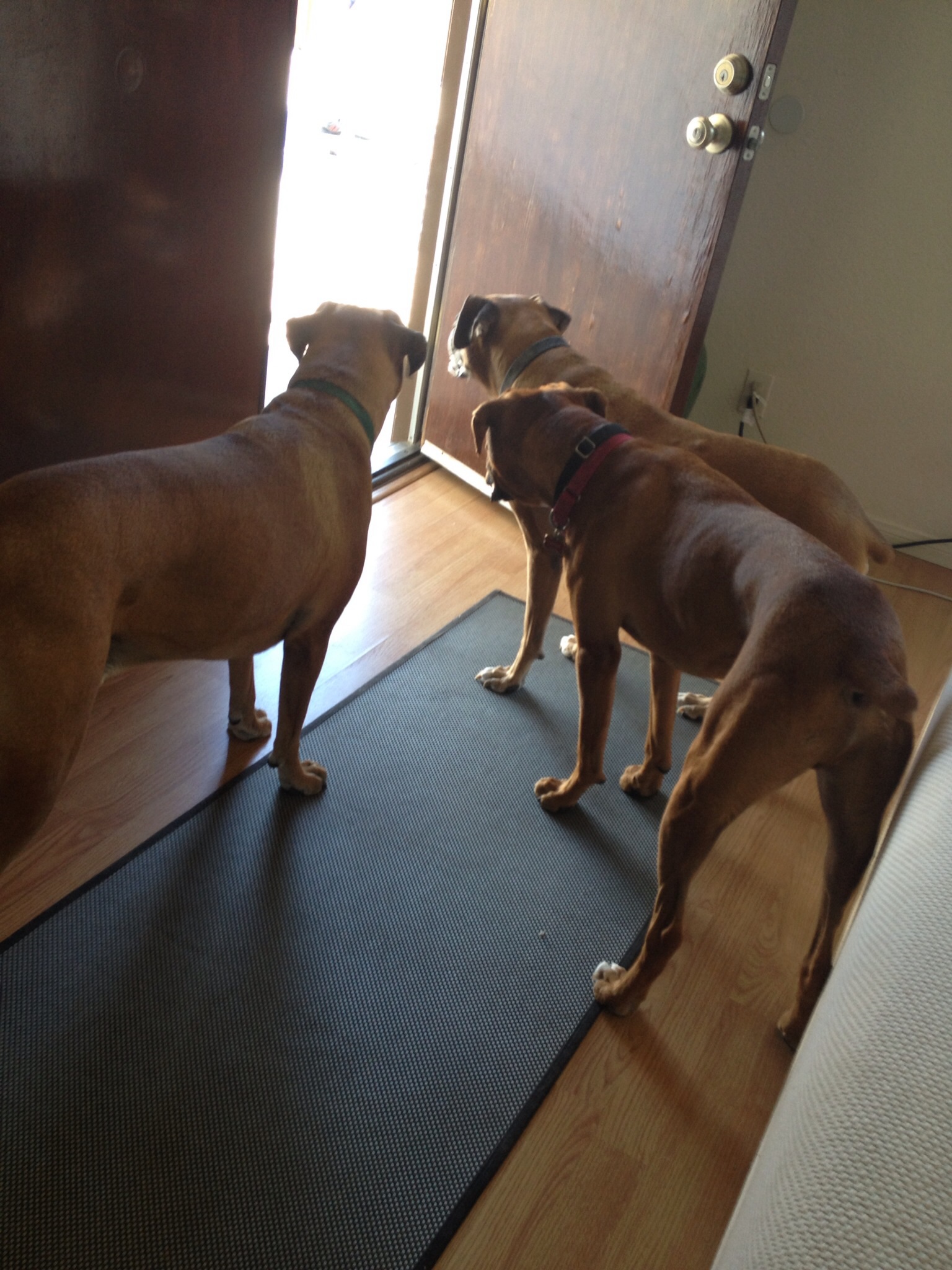
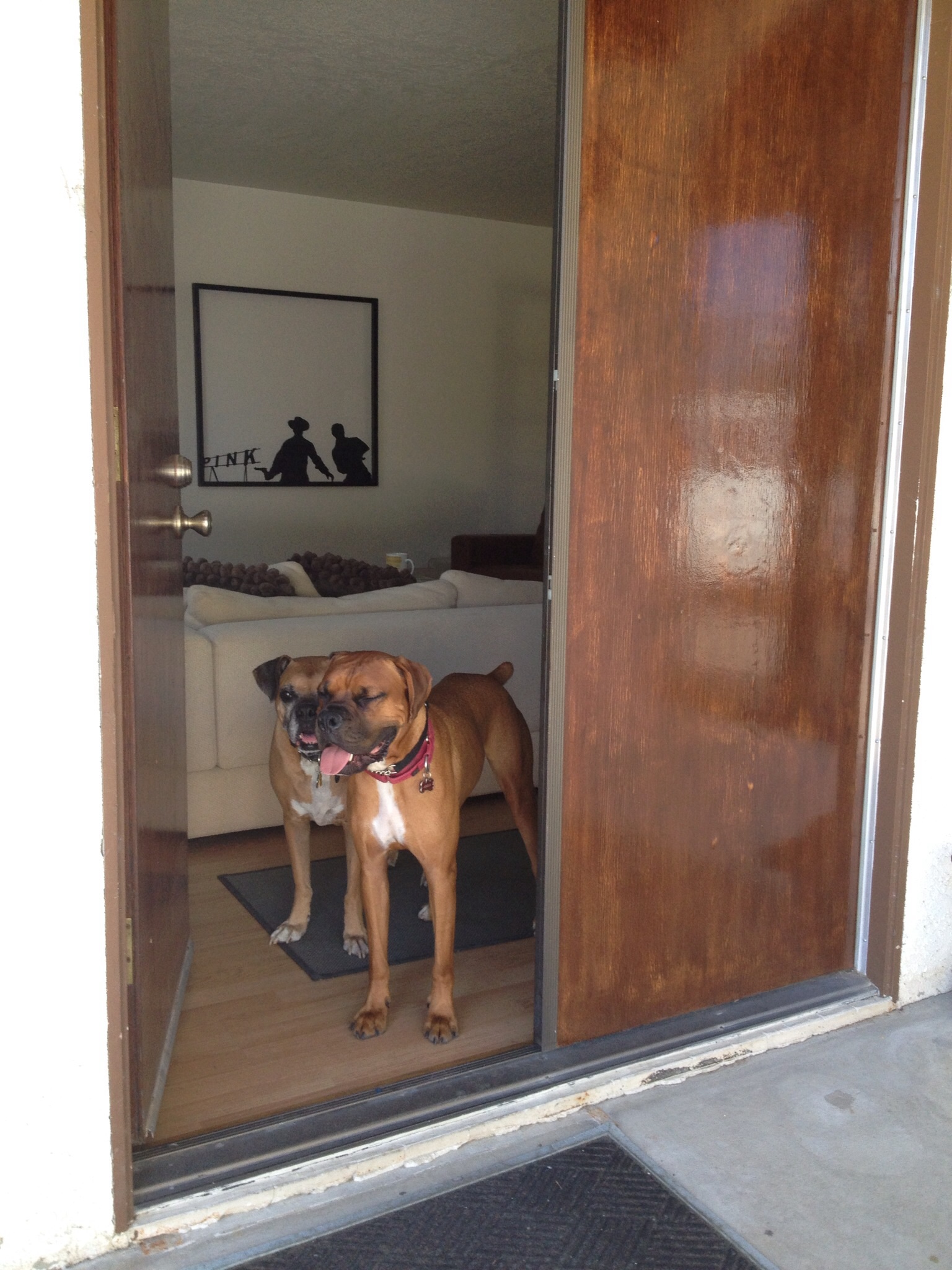
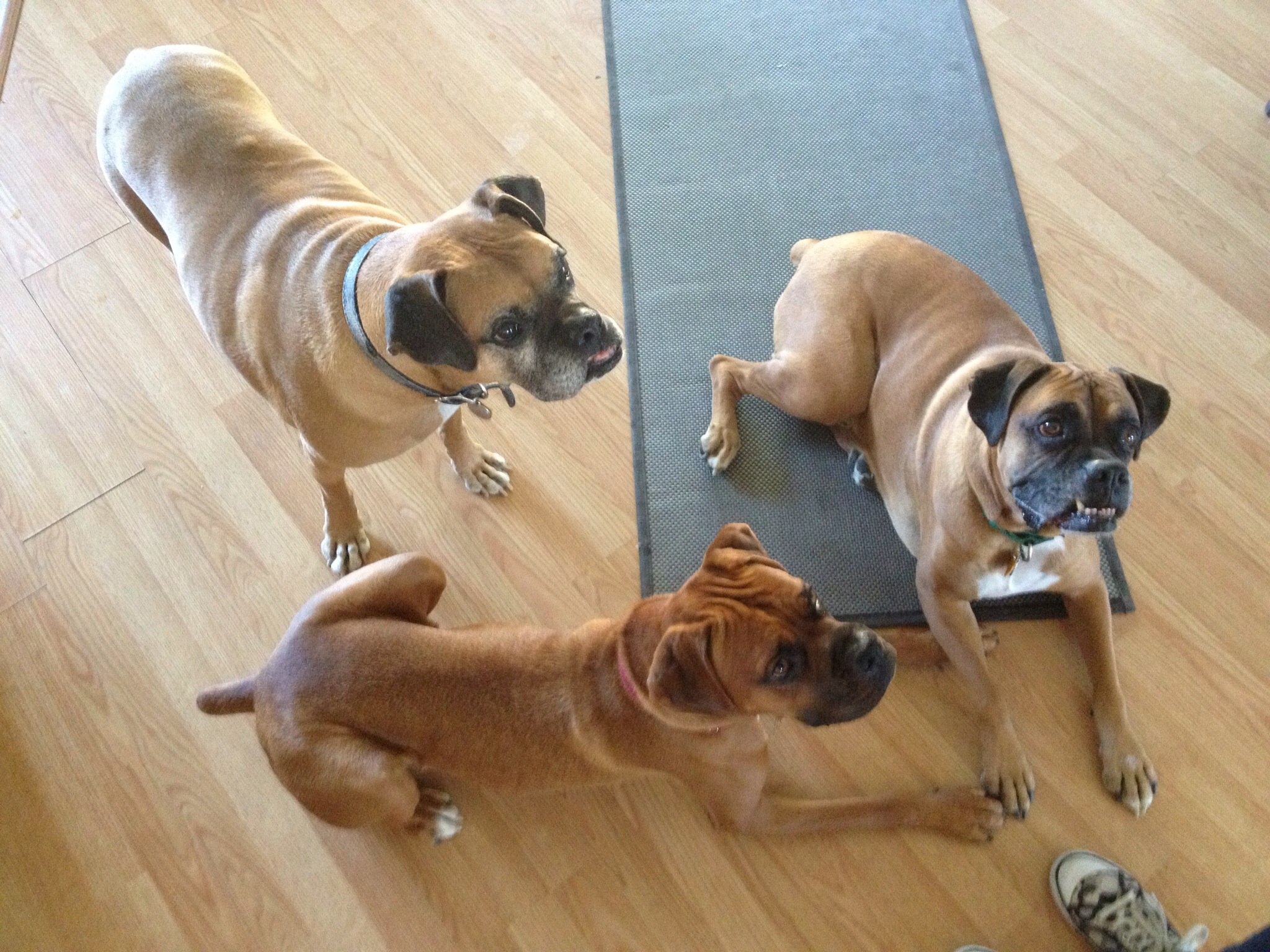
Teaching one dog a boundary (i.e., waiting at an open door) can be challenging and needs to be taught with minimal distraction as you work up to the major temptations. Teaching it to three dogs….well, the pictures tell the story. “Oscar, Balboa, and Argus, good dogs.” I even tossed out a toy and a ball and the most difficult challenge of all…having their dads walk past them as if greeting a guest at the gate. So smart!
Of course, sit and down are easy in comparison. Don’t tell the senior he isn’t lying down (he gets a free pass for putting up with the new, young adoptee). Such a great family!
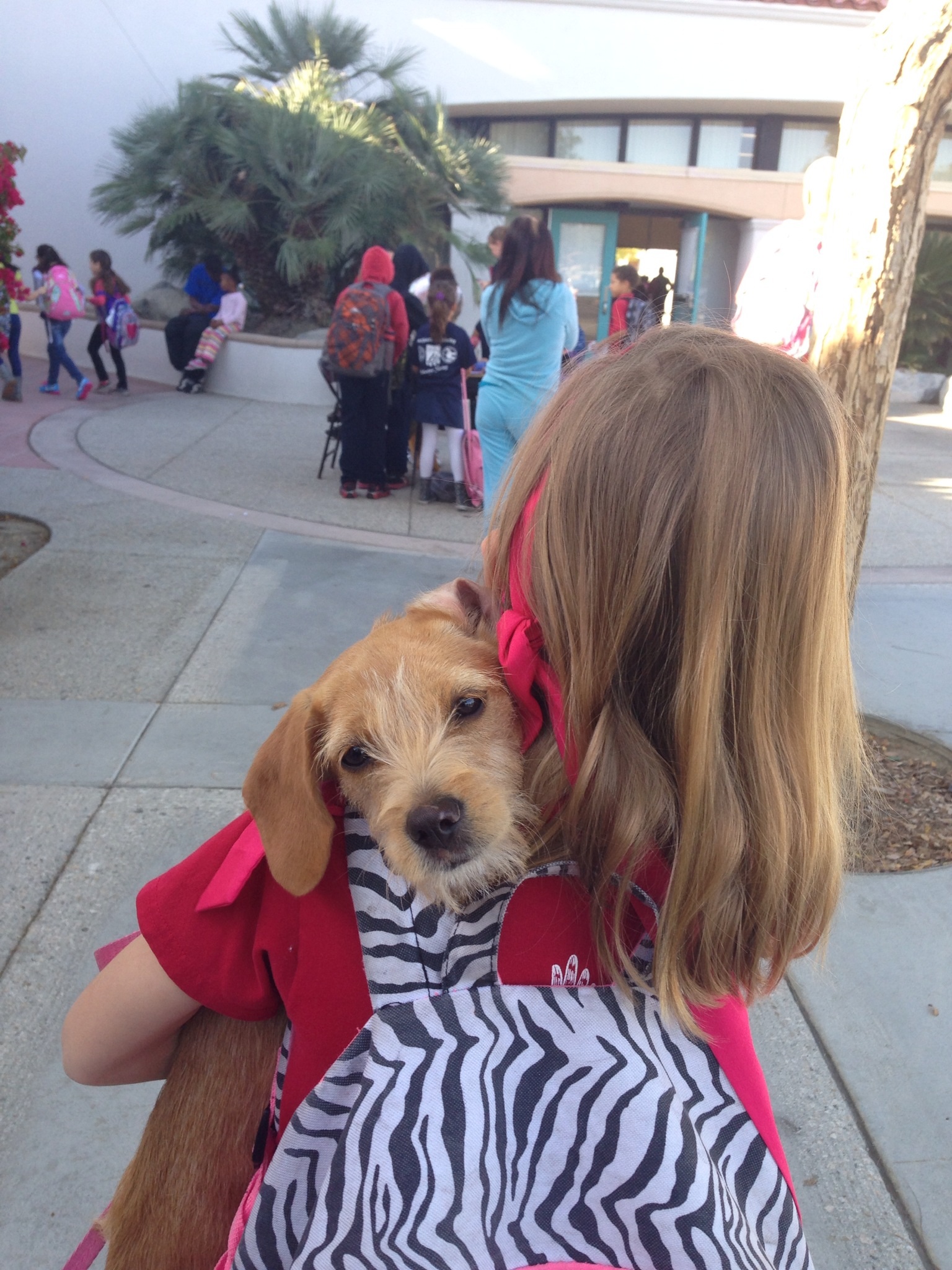
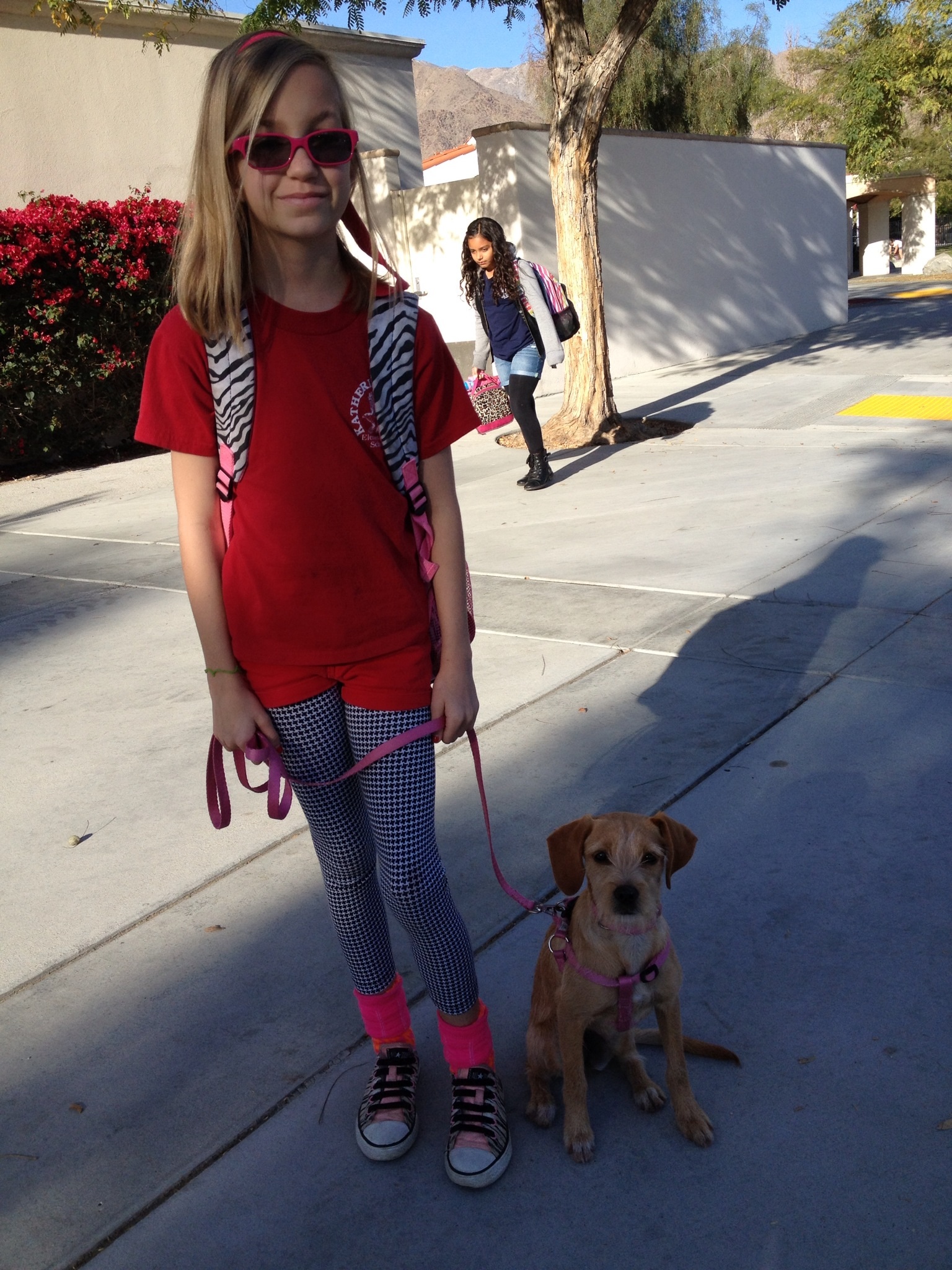
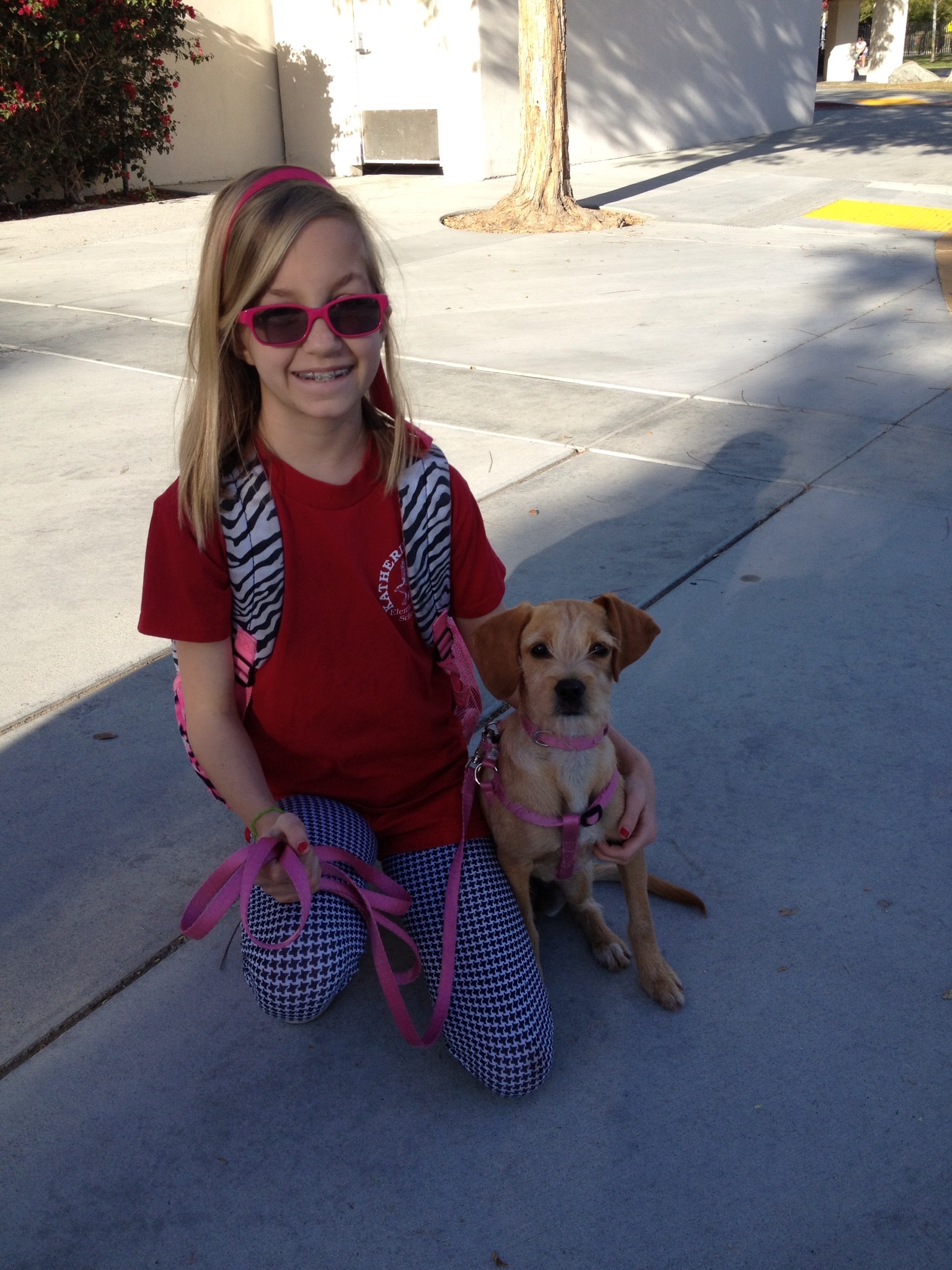
Meet Chloe and Coco. Chloe is an adorable, smart, and amazingly mature 8 year old. Her new best friend and rescued pup is Coco. Chloe’s family already had two larger dogs who are very well trained and the addition of this little one was new territory, so I was called. I am more than delighted to have the pleasure of working with this family and their commitment to having a stable, well behaved small dog (not always an easy task with a nervous rescue).
As some of you know, my heart is with assisting timid dogs in gaining confidence and feeling secure in their new homes. Initially, Coco was afraid of – well, as they say, her own shadow. Now? I will let the images do the talking. This is Chloe and Coco after we walked to school (with a lot of distractions) and are waiting for class to start. I am truly amazed and impressed with how bonded these two are and how this little (a-lot-less-nervous-now) pup looks to Chloe for guidance. A reminder that good things come in small packages – and, I’m not just talking about the dog.
I have often said, “The best dog trainer is another dog.” A well-adjusted, trained, and dog-friendly dog that is. I do my job of observing and contributing when needed but mostly I say things like, “Wear them out, Zoe!”
Zoe looks like a giant Yorkie and that makes their interactions that much more enjoyable.
If you need assistance in training and/or behavior modification from either Zoe, myself, or both of us, we are here to help!
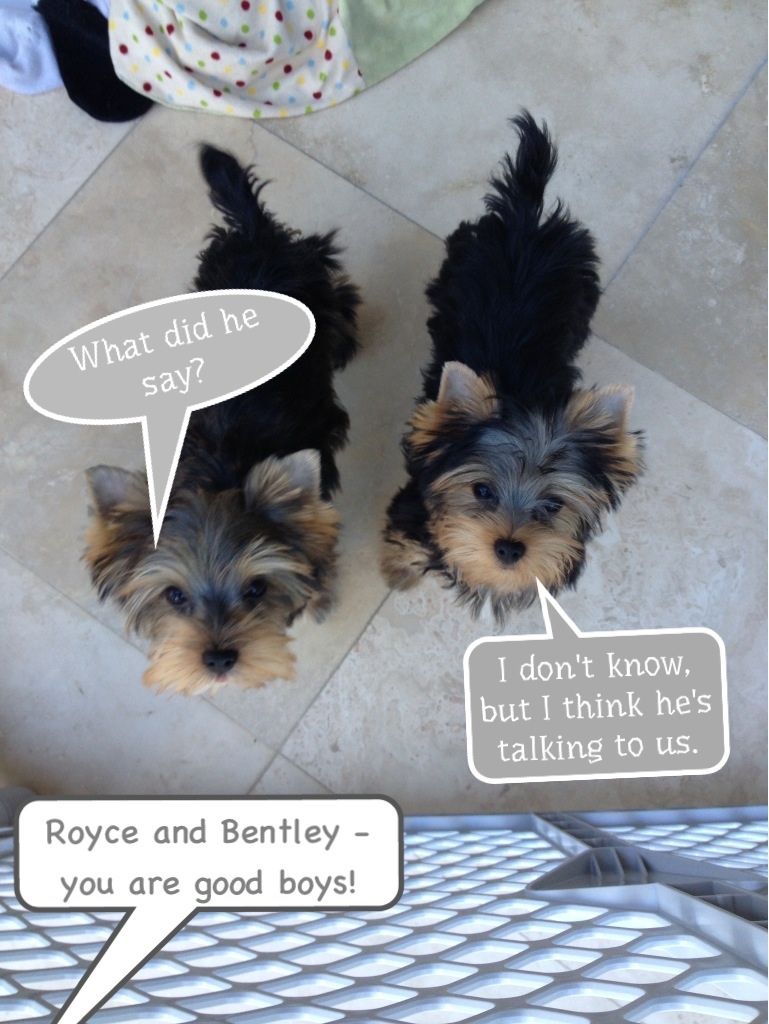
These little guys are just too cute. At almost four months old, these Yorkie brothers are learning their names and quickly becoming aware of their surroundings and their new home where they will be loved endlessly. They will require constant supervision (crate, x-pen, or on a leash) and a consistent schedule for feeding and house-training. We will begin basic obedience where “good” and “yes” are heard far more than “no”. Right boys? “YES!”
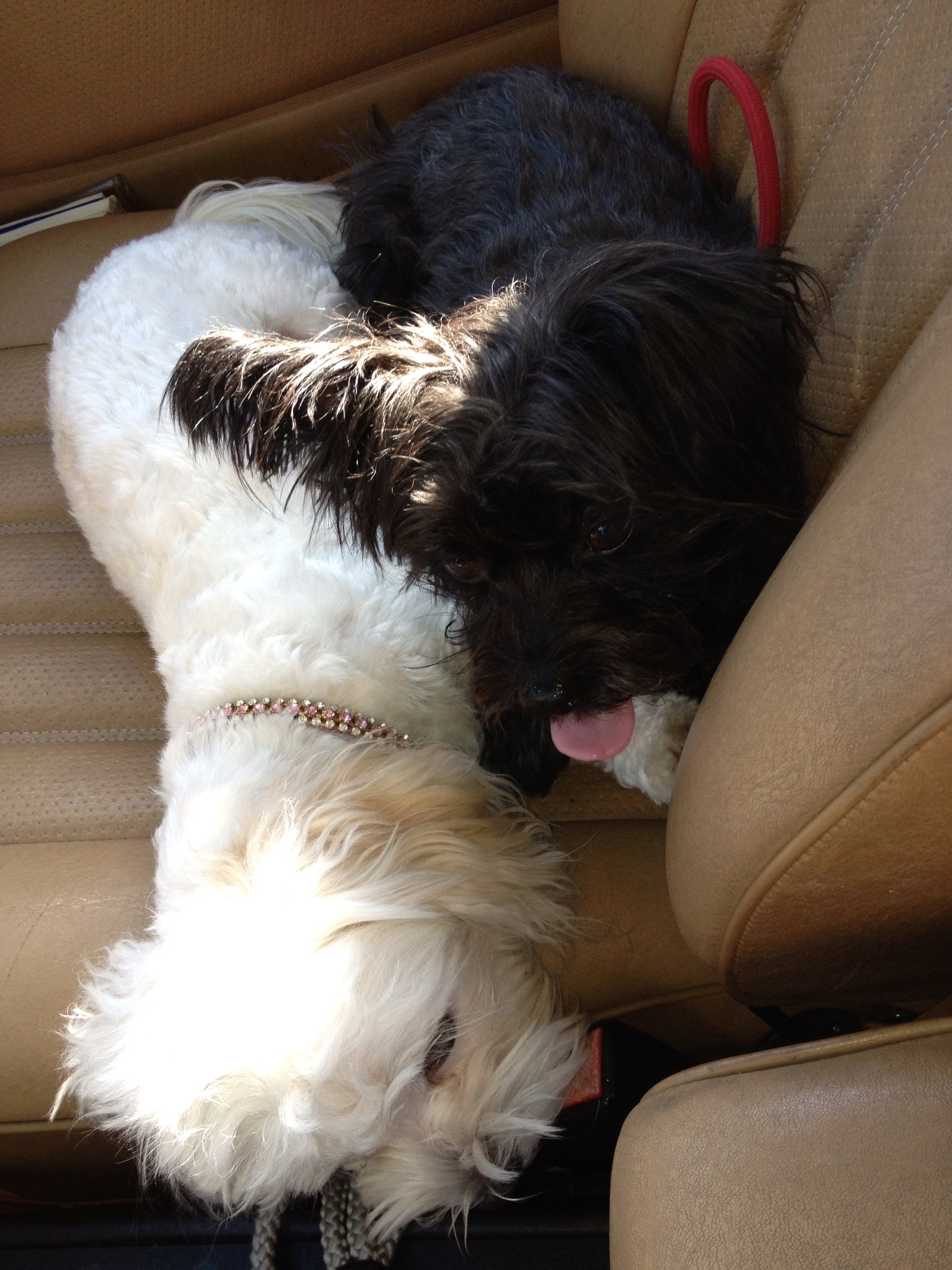
The images below are of two of my recent pupils. Moxie is the male Yorkie-poo and Matilda is the female Coton de Tulear. I was going to write about the reason I was called to their home – the reactive behavior to some dogs and the not-so-happy gardeners (not that the dogs were happy being reactive). However, if you are like me and are more of a visual learner, you would benefit more by watching me work with your dogs prior to you taking the leash. So, I will use the pictures to show you one of the positive affects of a training session. Before and after. . .I think they speak for themselves.
If you need help with a behavioral issue or just want a tired dog, give me a call!
It is 2012! With the start of a new year and the puppy adoptions that have happened and will happen in the coming months of spring, it feels like it is time to do a few posts on life with a puppy. I have a few suggestions, but am starting off with a video that demonstrates one of my favorite suggestions for not only how to train but also how to exhaust a puppy – use an older, well-behaved dog!
Dogs may be as receptive to certain human communication signals as infants. Here’s a great article that brings insight into how we communicate with our dogs. As with humans, actions speak louder than words!
One thing I know for sure is that in order for me to be thankful for things I consider to be less worthy of gratitude, I have to start with those things I am truly thankful for – my home, my bed – you get the idea. Real gratitude somehow overflows and wraps itself around those things for which we are not quite thankful. For some, our dogs are on the top of the list. For others, perhaps with a puppy or with a dog that is difficult, gratitude is not an automatic. (Feel free to insert your kids, work, and/or mate!)
I have decreased my writing about training techniques because the market is flooded with information on how to have a well behaved dog. It’s always described as quick and easy! Yet, our dogs still pull on the leash, still bolt when they see a squirrel or cat running away from them, still bark at the mailman and still attempt to jump on people when greeting. I don’t know about your dog(s), but mine haven’t read one word from the books and are quite content being dogs and letting me figure out how to work with them.
So. . .what about (seemingly) misbehaving dogs brings me gratitude – they aren’t perfect and we don’t have to be either. They are forever two years old and need to be asked and reminded of those quick and easy dog training steps we just knew would fix them. I’m grateful that in the midst of our frustration with some of their behavior, they don’t just turn around and bite us for asking them to sit when their prey drive or zest for affection is declaring, “get rabbit – NOW” or “that human wants to pet me I just know it, I know it, I do, I do!
Have you ever heard it said we show people how to treat us? It’s not much different with our dogs. From moment one, when you bring a dog into your home, they are learning from you. If you have other dogs, they are learning from them (and vice versa). If you provide no structure or “rules,” they aren’t likely to either. They will be looking to you for guidance on where they fit in and what’s considered good behavior.
I receive calls often from those who just brought a dog home and feel like it just isn’t going to work. The dog isn’t what they thought it would be. That’s normal. Ever heard of buyer’s remorse? It can happen during that first 24 hour perid when we wonder what in the heck we were thinking when we got another dog. So, how long should it take to train this new being of your affection? I wish there were a simple answer.
If you read my blog you know I feature Melody, my Yorkie. She is a perfect example of a dog from a shelter that was sure to be someone’s little cuddle dog – not even close. I knew her from the shelter so her history of biting those that reached for her would not get her into a home that was looking for that immediate cuddle gratification. How long would it take if she ever warmed up to a human’s touch?
My question to dog people is how long do you have to train your dog? You don’t train a dog to be affectionate and trusting by dicipline, you train by example and a lot of patience. After three years, she is still learning trust. She had some great teachers with the other dogs she’s been around. They showed her I was trustworthy.
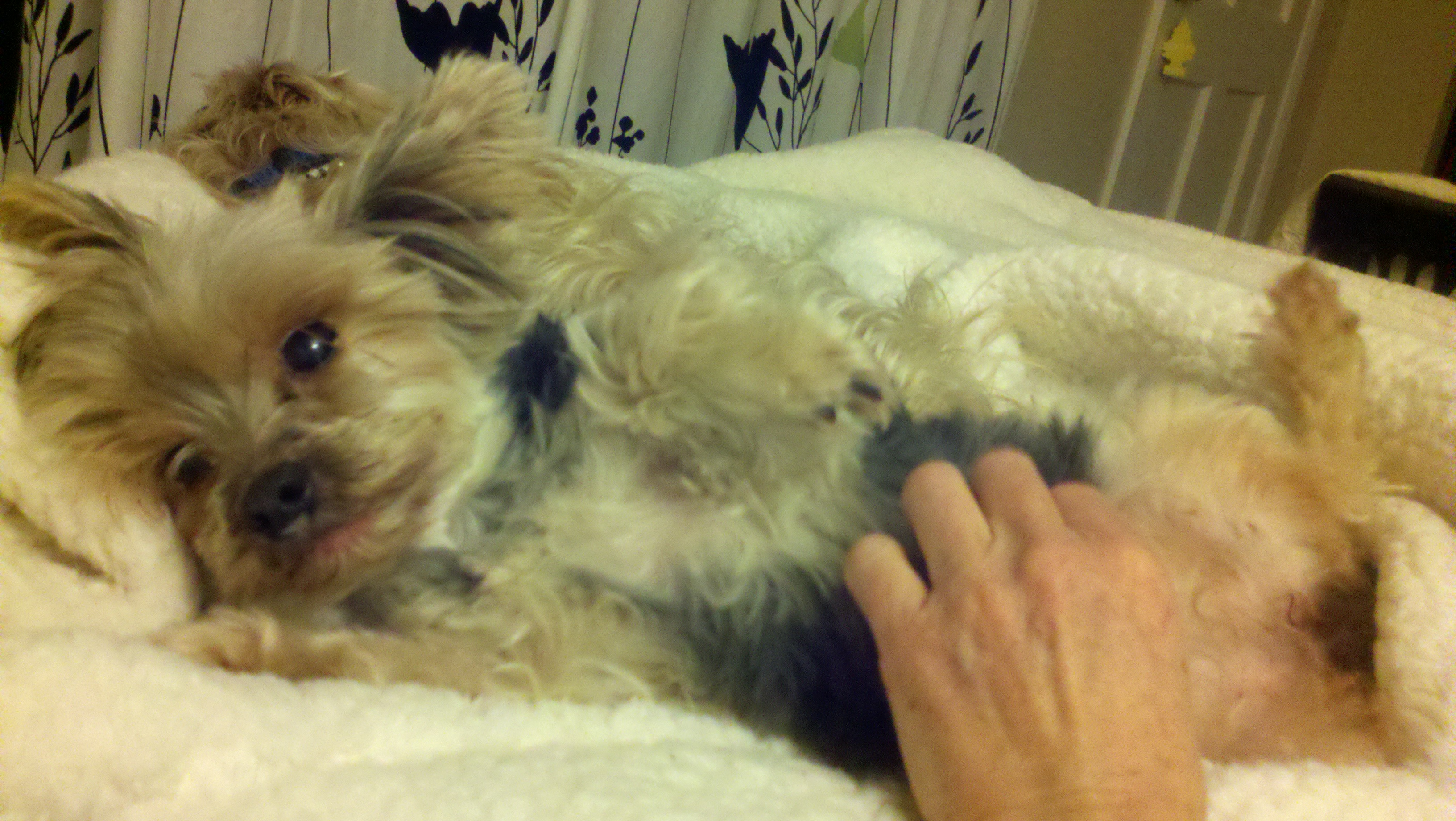
Here’s an image that I love because it took Melody a couple of years to allow herself to be this vulnerable. Don’t expect to see “this Melody” if you come to our house, but someday you might, and when you do, you will see she was well worth the wait! How much time do you have to train your dog?
I have worked with a lot of Standard Poodles, and have to admit they are very bright dogs and with consistency can learn just about anything you are willing to teach. Sophie, a seven-month-old Poodle, had just completed her schooling and was demonstrating her leash walking training skills on her older brother, Hoover. Good boy Hoover!