Archives for Dog Psychology category
Posted on Aug 14, 2015
Dog Psychology, Dog's Bucket List, Dogs Express Emotion, Learn From A Dog, Uncategorized, Yorkie
Recently, videos of people and their dogs fulfilling the dog’s bucket list are making the rounds on social media. It made me think of my own dogs and, in particular, my senior Yorkie, Melody. When I got her, her age was estimated to be between 10-13. (She’s been 13 for five years!) Regardless, I am aware she does things now that reflect her age (let’s call them senior moments).
A recent scare brought to mind the idea of a bucket list. What would her bucket list be? I thought of all the things that make her act excited and silly. The answer was simple – being with me. I took her on a camping trip and with the cooler temperatures, beautiful trees, and even with squirrels everywhere, she only wanted to be with me.
I’m absolutely certain our dogs express joy and happiness; just as they also express fear and anxiety. I know from my dogs that while they love going for walks, playing with toys, chasing lizards (or cats) – I’m at the other end of the leash, I’m the giver of the toys, and while Zoe would prove me wrong for a brief moment of time, they prefer me over chasing anything.
The bucket list? That’s for us. That’s us going for one last run or walk, one last toy toss, sharing that burger we never wanted them to have. It’s all for us. They don’t have an I’m-not-ready-to-go-yet list of things to accomplish. They live in the moment. The moment. With us.
Posted on Oct 17, 2013
Aggression, Behavioral Modification, Dog Humor, Dog Psychology, Dog Training
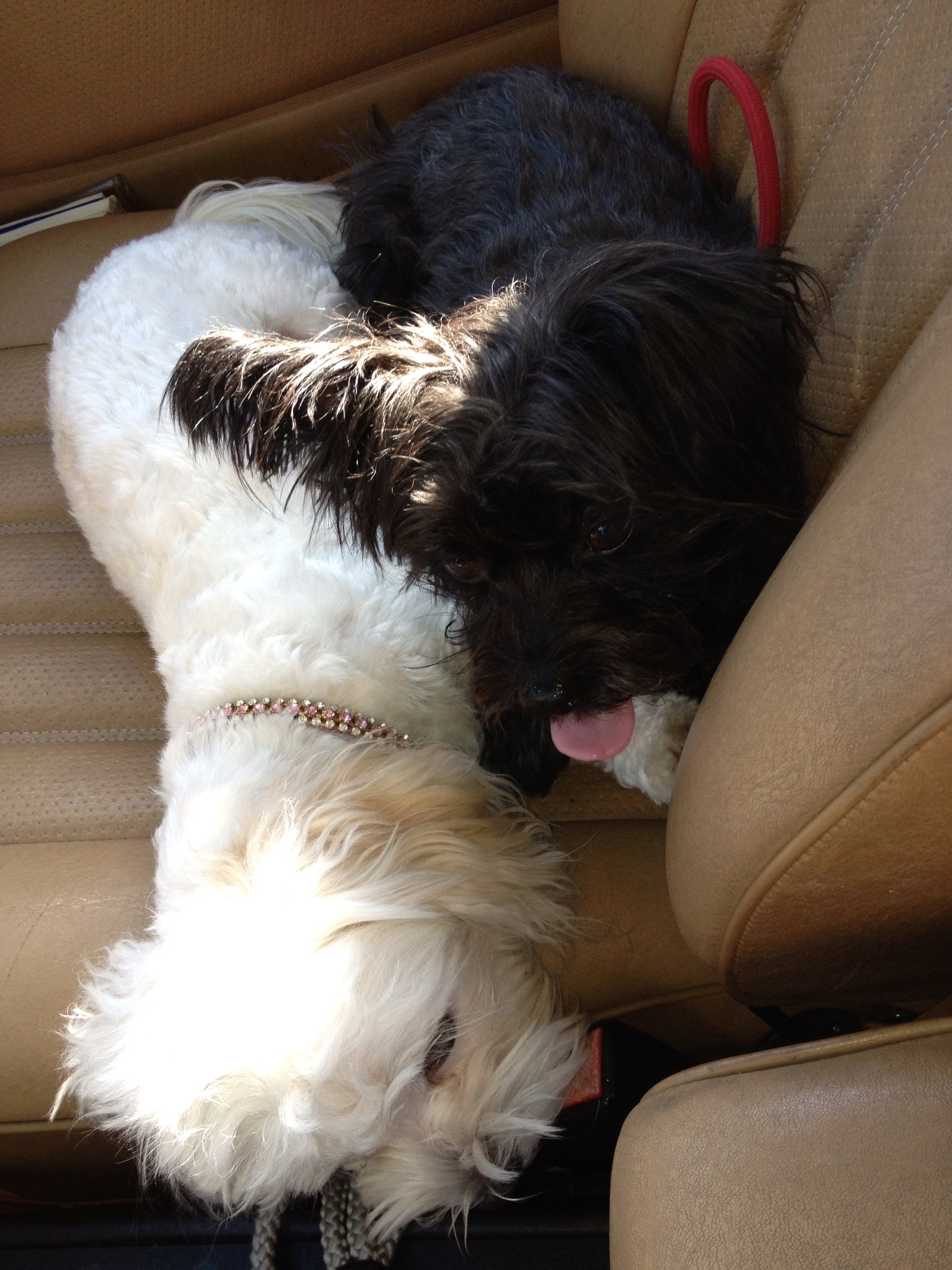
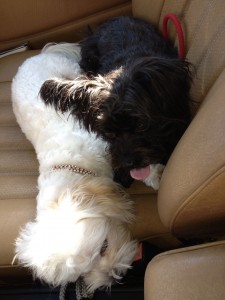
The images below are of two of my recent pupils. Moxie is the male Yorkie-poo and Matilda is the female Coton de Tulear. I was going to write about the reason I was called to their home – the reactive behavior to some dogs and the not-so-happy gardeners (not that the dogs were happy being reactive). However, if you are like me and are more of a visual learner, you would benefit more by watching me work with your dogs prior to you taking the leash. So, I will use the pictures to show you one of the positive affects of a training session. Before and after. . .I think they speak for themselves.
If you need help with a behavioral issue or just want a tired dog, give me a call!
Posted on Jun 12, 2013
Aggression, Behavioral Modification, Dog Psychology
I came across this article that does an awesome job of explaining and illustrating how some people perceive dogs and how dogs see some people. Dog lovers and advocates need to remember that. . .
Some People Are Afraid of Dogs and Some Dogs Are Afraid of People
Posted on Jan 08, 2012
Dog Psychology, Dog Training, Dogs and Cognitive Learning, Dogs and Instinct, Uncategorized
Dogs may be as receptive to certain human communication signals as infants. Here’s a great article that brings insight into how we communicate with our dogs. As with humans, actions speak louder than words!
Dogs Follow Human’s Gaze
Posted on Oct 18, 2011
Dog Psychology, Learn From A Dog
I have been told by more than one person that having a dog is a huge responsibility they just aren’t sure they can handle. When I say I have three dogs, then they multiply my responsibility by three. Caring for a dog does take some of our time, so I decided I would write down a few of my responsibilities in having dogs. Here’s what I came up with:
I am responsible for …
Talking sweetly to Melody as she wiggles, crab-crawls, and “gets silly”
Picking up Moby and dancing around as I sing our song.
Brushing Zoe as she paws for me not to stop.
Walking Zoe as she frolicks in front of me and runs back full speed to sit for a pet.
Telling Moby that Zoe doesn’t have the only bone in the house.
Laughing every morning as Zoe talks to me (seriously!) and the little ones look to see if I’m awake as they prepare to meet the day as if it were the best thing ever.
Opening the back door and letting the dogs out…then, opening the door to let the dogs back in.
These are just a few of them…
I can now see why others perceive my having dogs as a HUGE responsibility. I gotta’ go now – there’s a dog that needs a hug.
Posted on Oct 05, 2011
Dog Psychology, Dog Smile
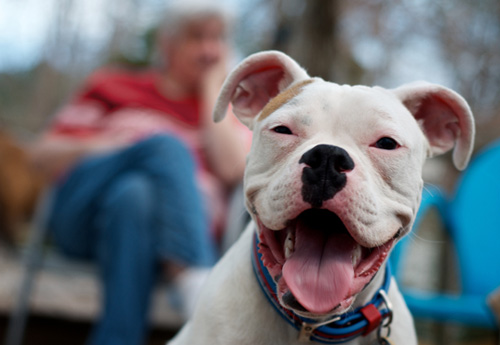
. . .of course they do! There are experiences in life when science finally validates what some of us already knows or believes to be true. If you have spent any time observing dog behavior, you already know the answer to the question – Do Dogs Smile?
Posted on Aug 11, 2011
Dog Psychology, Learn From A Dog
This post is a reminder of how our dogs live in the moment and what we can learn from them. Dogs are in the moment. The moment. They aren’t thinking about dinner, wondering how far we are going to have to walk, or wishing they would have brought their phone or ipod. They are full of awareness of the myriad of scents, sights and sounds as they take each step.
It reminds me of the study on gorilla behavior while in the wild. If a gorilla is walking through the forest and sees bananas in a tree, they will then look for a stick to use to reach the bananas. A gorilla has never been observed to pick up a stick and walk through the forest in the event they may later find bananas to eat. You might be thinking that it’s good to prepare and that’s what separates us from animals. I agree – to a point; however, they have the added benefit of not worrying about what comes next. . .how about you?
Zoe is exuberant about her walks and meeting people. She stops to smell the roses along the way (okay – maybe the scent is not actually from a rose). One moment, I’m joining her in appreciation and observation of what is around me and the next moment I’m thinking about what to buy at the store later this evening or I get lost in the concerns of the economy. The point is to challenge ourselves to take a thirty minute walk with our dogs (or with a two-legged companion) and see if we can stay in the moment for the entire time. I am working on it, and it is a practice. Thanks to Zoe (and wonderful friends), I have great teachers.
It’s thoughtful Thursday – take a walk even if it’s from your work to your car and see if you can stay in the moment. It’s an amazing way to live – just ask your dog.
Posted on May 13, 2011
Dog Psychology, Uncategorized
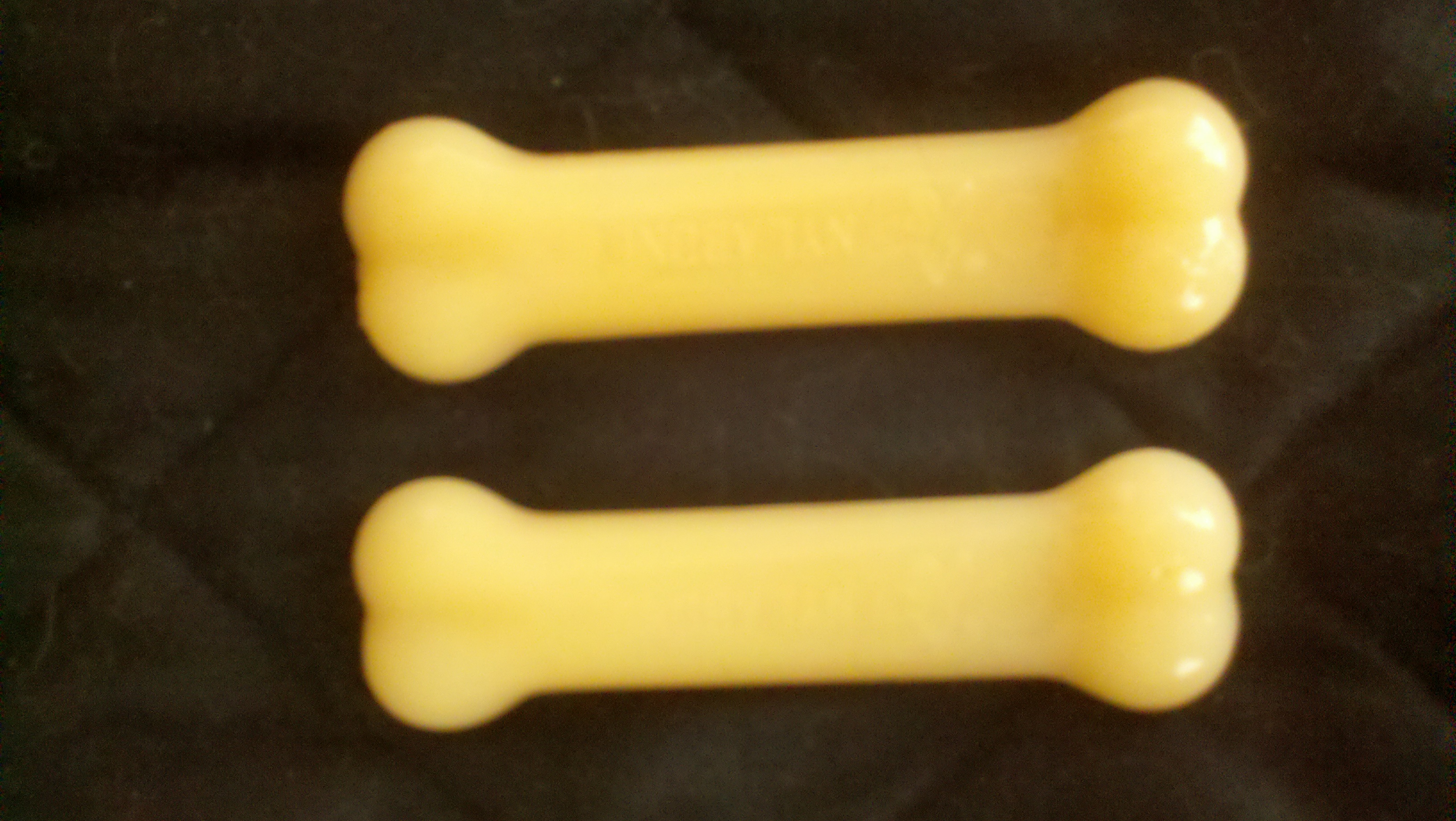
Here is an image of two identical dog bones. Right?
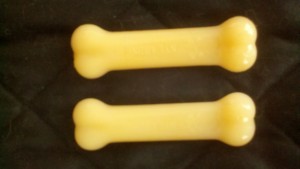 The answer is yes, if you are a human. If you are a dog or can for a moment see through the eyes of a dog, the bone they want is the one you give to the other dog. That’s just how it works. Show them, tell them, even try to trick them, and they know they have the wrong bone. They are supposed to have the bone the other dog has until, of course they do, then the rotation starts all over again.
Finally, if you are lucky, they will actually chew on a bone and relinquish their obsession with the other – if but only for a moment.
Posted on Mar 18, 2011
Adopt a Shelter Dog, Behavioral Modification, Dog Psychology, Dog Rescue, Dog Training, Yorkie
Have you ever heard it said we show people how to treat us? It’s not much different with our dogs. From moment one, when you bring a dog into your home, they are learning from you. If you have other dogs, they are learning from them (and vice versa). If you provide no structure or “rules,” they aren’t likely to either. They will be looking to you for guidance on where they fit in and what’s considered good behavior.
I receive calls often from those who just brought a dog home and feel like it just isn’t going to work. The dog isn’t what they thought it would be. That’s normal. Ever heard of buyer’s remorse? It can happen during that first 24 hour perid when we wonder what in the heck we were thinking when we got another dog. So, how long should it take to train this new being of your affection? I wish there were a simple answer.
If you read my blog you know I feature Melody, my Yorkie. She is a perfect example of a dog from a shelter that was sure to be someone’s little cuddle dog – not even close. I knew her from the shelter so her history of biting those that reached for her would not get her into a home that was looking for that immediate cuddle gratification. How long would it take if she ever warmed up to a human’s touch?
My question to dog people is how long do you have to train your dog? You don’t train a dog to be affectionate and trusting by dicipline, you train by example and a lot of patience. After three years, she is still learning trust. She had some great teachers with the other dogs she’s been around. They showed her I was trustworthy.
Here’s an image that I love because it took Melody a couple of years to allow herself to be this vulnerable. Don’t expect to see “this Melody” if you come to our house, but someday you might, and when you do, you will see she was well worth the wait! How much time do you have to train your dog?

Posted on Jan 15, 2011
Dog Humor, Dog Psychology, Dogs and Instinct, Dogs Express Emotion
Isn’t it just the best feeling to arrive home after a long day at work, a few minutes taking the trash out, or a few seconds to get the mail, and our dogs are all over us with enthusiasm and greetings of, “welcome home, we’ve missed you!”
Does it mean they love us or is there an ulterior motive? It’s probably better to just appreciate and adore them because we may not want to know the truth. The other day when I came in the door, I distinctly heard them excitedly saying, “our food source is home, our food source is home!”
I love them regardless of what they feel or don’t feel. I think there are certain truths we understand about dogs and the rest we make up as we go along. Considering the joy they bring to our lives, does it really matter – I didn’t think so.