Posted on Dec 21, 2009
Behavioral Modification, Dog Training, Pinch Collars
Locally, I can be known as “The Tender Tutor.” That’s not to say I’m too soft or that the dogs I work with don’t respect me. I believe that every dog is different and there are gentle, positive ways to work with most dogs.
Pinch collars (prong collars or power steering collars, as I like to call them) are a great training tool for some dogs who aren’t bothered by choking themselves with a flat collar or still pull when using a harness. However, I really disagree that a pinch collar is the only solution and best way to train every dog.
I have converted many people who thought for sure they needed to exclusively use the prong-collar approach. I have had great success transferring them to a Martingale training collar which looks like a regular flat collar but has a small section of material or chain that will cinch and give a correction without choking. When used correctly and consistently, they work great.
My biggest objection to pinch collars is that they are used incorrectly. Also, you don’t want a dog that needs to wear a prong collar in order to pay attention to you. They are a training tool and not a magic wand for a dog that hasn’t been leash trained adequately. I have found that by using the prong collar, the human at the other end of the leash relaxes because they have the sense of more control. That is a good thing. Once the human feels more in control and is more relaxed, they may be able to switch to a Martingale-type training collar with a greater sense of confidence.
It’s important that training be humane and regardless of the type of collar or harness, this takes consistent expectations and a lot of patience and time. Before using a pinch collar or an e-collar, please contact a trained behaviorist. I am happy to answer any questions you have on the correct collar for you and your dog.
Posted on Dec 15, 2009
Behavioral Modification, Dog Humor, Dog Psychology, Dog Smile, Dog Training, Dogs Express Emotion, Dogs and Cognitive Learning
It is fascinating to read the studies on the analysis of dogs and their expression of emotion. We, of course, refer to emotion in the sense that we experience it. Dogs; however, live in the moment so their emotion may be more raw than ours. I don’t think they are capable of deceiving us by expressing an emotion they aren’t really feeling at the moment. They don’t pretend as well as we do!
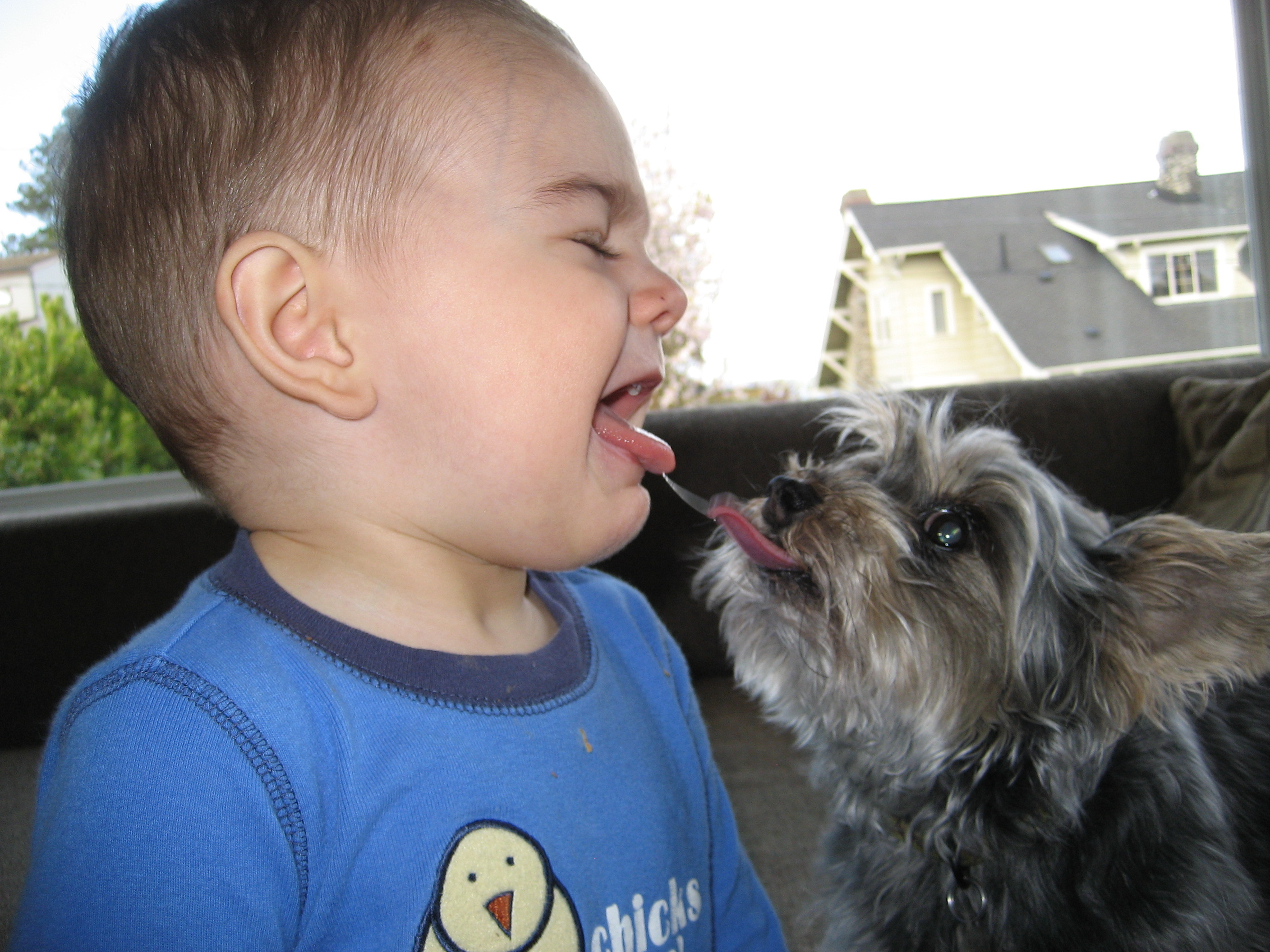
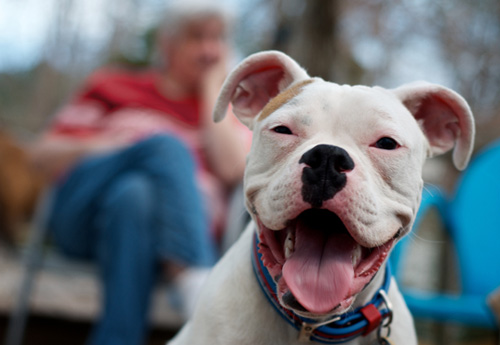
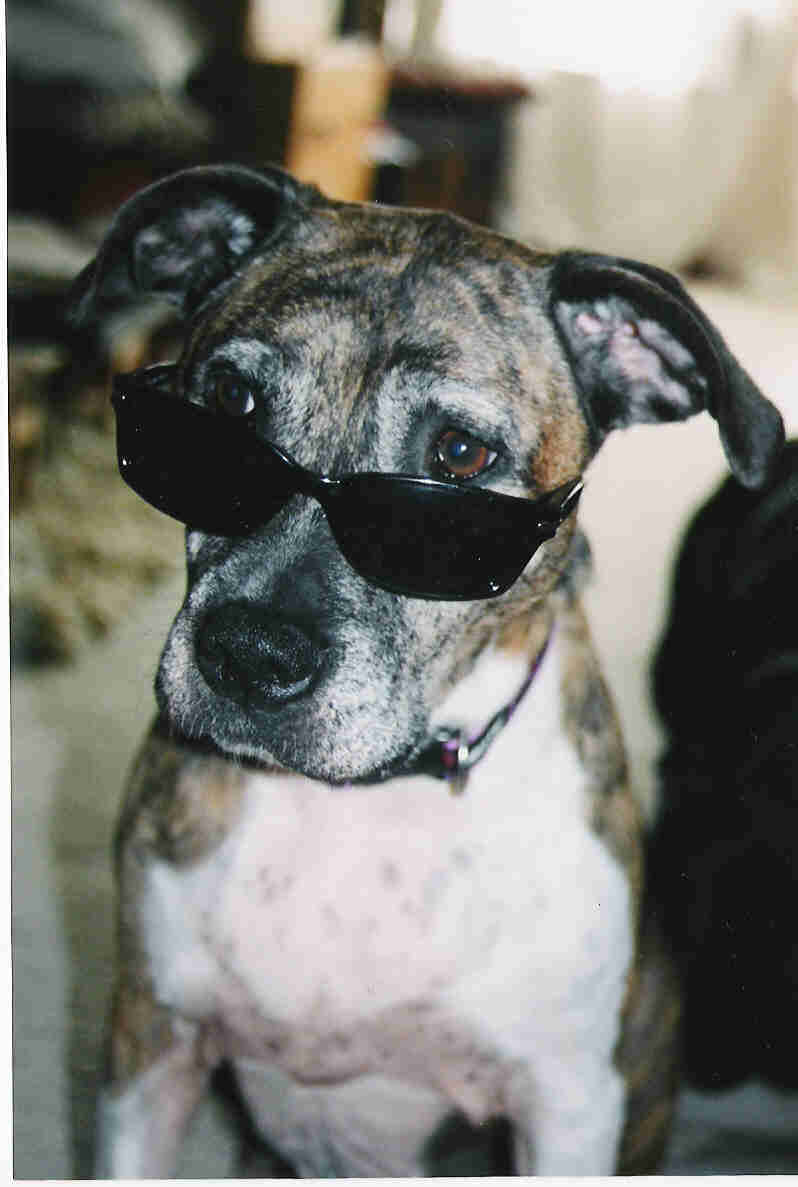
There are fun photographs of dogs smiling. And they do! Some more than others, but it still qualifies as a smile. I also have seen more than my share of grumpy-doggy face. The “it’s you again” look on some dogs when I (the trainer) show up for another training session can be very comical - for us humans more so than the dog.
With the cooler temperatures, the dogs seem quite content to cuddle on their beds a little longer than normal. And, some days, I think they get up on the wrong side of their cedar-chipped, double-organic-fiber-stuffed, memory foam dog beds! Perhaps they have bad dreams and restless nights too; so, I will cut them some slack.
Regardless, I think it’s fun to notice that much like a little child, a dog’s expression of “emotion” shifts in a nano-second. In a flash, they go from grump-dog to tail-waggin’-ready-for-a-walk dog. I wish it were that easy for us two-leggers! Once again, we learn from our dogs how blessed it is to live in the moment.
Posted on Dec 11, 2009
Behavioral Modification, Dog Psychology, Dog Training
Is this an ad your dog has placed on Craig’s List or CareerBuilder? Are they looking for someone to be in charge so they can relinquish the responsibility? Are they acting out and resisting your instruction?
Maybe your dog isn’t yet savvy enough to post such an ad, but if you have a dog, there is the need for a confident leader…is it you? If not, who is it? In the words of Cesar Millan, dogs need and respect a calm, assertive leader.
My dogs need to be reminded at times that the position of leader has been filled, and it just so happens that in our home the job belongs to the only one who walks on two legs. I thought since they need to be reminded, maybe you do to.
The primary purpose and goal of my work as a trainer/behaviorist, is to show humans who their dog is and what they are capable of learning. Don’t wait for your dogs to fill the position of leader. Most people fill some position in their life where they lead another. It may take practice, but put yourself in that mindset as you provide (calm, assertive) guidance for your dog.
They may resist at first, but with consistent behavioral expectations from you, they will respect you and remove the job opening!
Posted on Dec 09, 2009
Dog Psychology, Dog Training

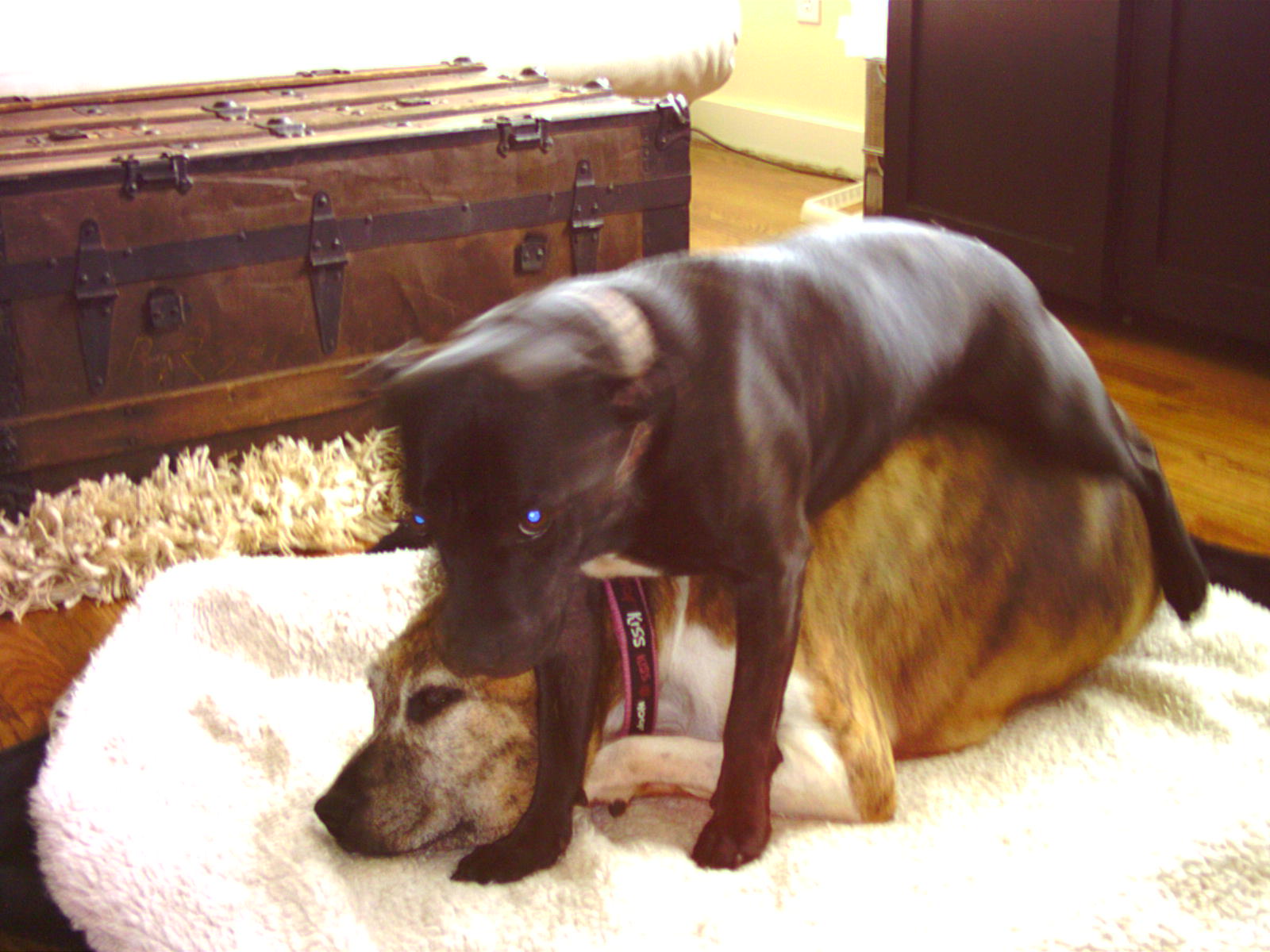
Uh, Mo, we’re busted..get up, I think she wants to sit down.
Posted on Dec 05, 2009
Behavioral Modification, Dog Psychology, Dog Toys, Dog Training, Dogs and Cognitive Learning, Dominant Dog, Uncategorized
You may not have thought of a dog as having patience. Well, they do - or at least that’s what I’m calling it.
If one of my dogs has a toy, regardless of the five other toys available, someone will want that exact toy at that exact moment. That’s no surprise. Of course, they want what the other one has. Among these boys, It’s a constant dance of who dominates who.
After a couple of human-to-dog interventions, they know not to mess with one another, or everyone loses (as in I take the toy). See, it’s my toy, and I am kind enough to let them have it. I have also established the rules that go along with toy-play.
This morning, Mac is chewing on a toy as Moby stands patiently by looking for either a safe “in” to get the stuffed creature, or for Mac to get bored and walk away. He will wait longingly for quite awhile before he loses interest. He doesn’t make a sound…waiting patiently for the right moment. I think he actually thinks he “won” if Mac relinquishes the object without care.
I like the thought of that - particularly as we enter the Holiday season. It’s like saying, “I really want what you have, but I’ll just wait patiently while you enjoy it, and when you don’t want it any more, I’ll take it.”
Thoughts of peace and patience to you this season!
Posted on Dec 04, 2009
Adopt a Shelter Dog, Behavioral Modification, Dog Psychology, Dog Training, Rehoming a Dog
What is the best way to introduce a new dog to the family?
I often hear of dogs who are being re-homed after being with their new family for only a few days. I understand the tension that can exist when you find that your beloved Prince doesn’t like the play mate you hand-picked for him. You were certain that getting another dog was the answer to helping him calm down.
If it were only that easy! All dogs are not created equal (in their minds)…they may want nothing to do with each other and yet separate them and they are wonderful, friendly beings. So, maybe getting a new dog wasn’t the best idea you’ve had, but re-homing too quickly may not be either.
The new dog should be in the home for a few weeks learning and earning their place. With you as the leader, take the introductions slowly. In our enthusiasm, we bring the dog in, introduce it to the other dog and go about our lives expecting (hoping) they will figure it out. Some do and some don’t. They are the ones who end up seeing their face on a “free to good home” ad. Taking the time to let the dog fit in more naturally may save everyone!
If you are bringing a new dog into your home and want to get off on the right track, please send a note in the My Question box to the right, and I will be happy to assist you! (I share the box with Melody)
Posted on Dec 02, 2009
Behavioral Modification, Dog Psychology, Dog Training
It’s a busy time for a lot of people…people who just got a puppy and perhaps forgot how much work it can be! You may be thinking they are puppies, so no big deal. You can train them later.
Have you heard the phrase, “we show people how to treat us?” I would like to include dogs in that! You are training your dog how to be in the home (and elsewhere) whether you think you are or not. The moment you bring them in and for years to come, they will be learning from you.
Please don’t misinterpret this to think I believe we should try to make dogs into good little humans. That will never be - Thank Dog! However, since they are so good at being dogs, we need to use “dog training” in how to adapt to life in a human family. This is always done out of respect for who they are and their inherent behaviors.
Having said that, if your friends have excuses for why they can’t come in or you panic when there is a knock at the door, or during meals, or any other time, you have “trained” your dog. Think of training them as providing consistent, repetitive guidance on what’s good behavior in the home and in relationship to their surroundings.
We have all walked into someone’s home and it was obvious that it was the dog’s home and he was kind enough to let the humans stay. That’s not the fault of the dog. I don’t necessarily think it’s healthy for the dog or humans either!
As dogs mature and go through their hormone shifts, they will have new responses and can be affectionately referred to as teenagers. This is when consistency on your part is so important. A consistent, positive, persistent approach will do a lot more than a raised voice and frustration.
So, as you go about your day, remember that you are training your dog…the question is how?
Posted on Nov 29, 2009
Dog Smile

Posted on Nov 24, 2009
Dog Psychology, Dog Smile, Dogs and Sarcasm, Energy and Dogs
Most people get it by now that dogs pick up on our energy. We pick up on theirs as well, but most humans prefer to act like they don’t get it! Why is that?
I was wondering if dogs understand when we are being sarcastic? I think they do. Why? Because we have an energy about us that is usually playful and play is something they understand.
A few examples:
- Zoe has taught herself to open the slider door. That’s not necessarily a bad thing except she doesn’t know or doesn’t care to know how to close it behind her. I usually look up with a smile and say, “close the door, you’re letting the flies out.” I swear she will turn around, look at me with her ears up and tail wagging as she gives me a big smile. Please don’t act like you’ve never seen a dog smile.
- Mac doesn’t run, he frolicks! However, he typically saves this spontaneous happy walk for when he has something in his mouth that isn’t his. I say sarcastically, “good boy!” He brings whatever it is to me and proudly hands it over! Seriously.
If I can be a little sarcastic with them, it helps me to take things in stride, and I do think they get it. They get my energy and intent about what I’m saying. For me, it’s entertainment. For them, they’re just words that make me smile and they like that.
Posted on Nov 20, 2009
Behavioral Modification, Dog Humor, Dog Psychology
Friday at last! After another week of being the watchful eye and keeping the household safe, Moby can relax. . .